Penguin World Project – Saving the World’s Oceans

Antarctica, Falkland Islands, Media, News and Updates, Travel Photography, Uncategorized, Wildlife Photographs

As some of you may already be aware (those of you joining me on my Antarctica White Nature Expedition next year) I was recently invited to join the Penguin World Project as one of the project photographers. In brief, the Penguin world project focuses on conservation of our marine ecosystem and aims to help spread awareness of the rapidly deteriorating health of the world’s oceans. Penguin World believes penguins are the best Ambassadors to address conservation issues and challenges for the oceans marine life. For communicating the message Penguin World are publishing books, articles and arranging expeditions, exhibitions and events worldwide to drive urgently needed attention to these important conservation topics. Being asked to be a part of the Penguin World Project as part of a small select team is a great honour and more importantly a fantastic opportunity. I have long wanted to push my efforts and photography more into conservation and I am looking forward to working actively in the project over the coming months. The project also wants to work closely with Partners who want to join forces for a better future for our marine ecosystem. You can read more about Penguin World at the Penguin World Website. I urge you to consider donating to Penguin World. Every small contribution helps. Even $5 (the cost of a cup of coffee) is helpful and appreciated. No one is paid for their involvement in Penguin World and all donations are used to help meet the projects aims and objectives. Donating is only one way to become involved in the project; even spreading the word helps! If you would like to be kept up to date on the progress of the Penguin World Project  you can sign up for the Penguin World Newsletter.Penguin Love

The Mission

Our MISSION is to draw the world’s attention to the importance of, and threats to, our marine ecosystems. Penguins are the perfect ambassadors for communicating about the 18 most serious conservation issues. Adopting a positive and proactive approach to tackling some of the biggest issues, we aim to involve scientists, academics and global companies that have established social responsibility and environmental strategies.

Our VISION is a future with healthy and vibrant oceans. To achieve this, we want to share solutions for more sustainable fisheries, safe seafood, cleaner waters and thriving marine life.

Conservation

On our beautiful blue planet, the sea covers more than 70% of the surface. But the world’s oceans are suffering from pollution, unsustainable fishing, habitat destruction and climate change. How do human activities affect our oceans and what technological innovations, management changes and political agreements will resolve these issues?

Communication

Photography and film are powerful tools to communicate about the conservation issues penguins are facing and outline possible solutions. Some of the world’s finest nature photographers are currently undertaking expeditions to remote islands and areas in the Southern Hemisphere to capture the images to share these stories.

Why Penguins?

Penguins are perfect ambassadors for the conservation of our seas. They eat the same fish species as us, move around upright and have a complex social life, in which we can see a reflection of our own. They are funny and cute, and they speak to us on an emotional level. They are a living barometer of how marine conditions are changing.FalklandIslands2015-3179-Edit


Departing for Polar Bears of Svalbard 2016 Expedition

Arctic, Iceland, News and Updates, Photographs, Travel Photography, Uncategorized, Workshops and Expeditions

It seems like only last week that I returned from the South Island of New Zealand (I am sure time is accelerating as I get older) but in a few minutes time I will be piling into a taxi with all my gear and heading to the airport for the long haul flights to Oslo and then onto Longyearbyen for my 2016 Polar Bears of Svalbard expedition. Svalbard has become one of my favourite destinations in the world for both Wildlife and Landscape photography. It is an incredible area located deep within the Arctic circle that offers the possibility for fantastic polar bear photography as well as other Arctic species including Walrus, Arctic Fox, Reindeer, Whales and more. The landscape of Svalbard is also very much an untapped gem and there are limitless possibilities for photography in this remarkable Arctic environment.

On this expedition we are using a small ice hardened vessel that will enable us to get in nice and close to drift ice around Svalbard. Importantly, it has nice low decks so we can get down to eye level with our subjects. With this expedition being limited to just twelve participants we will have plenty of room for everyone to photograph at once from both ship and zodiac and I am super excited to share this experience with all aboard. As well as Polar Bears, we will also likely photograph Walrus, Arctic Fox and a great many Arctic sea birds during our expedition.

After I finish in Svalbard I am headed directly to Iceland for two back-to-back workshops in the Highlands. Each of these workshops covers a different area of the Highlands and each has something different and unique to offer. The highlands are the real heart of Iceland and at least to my mind offer some of the most stunning scenery and photographic opportunities to be found anywhere. It is also a wonderful chance to get off the main roads and into less visited areas of the country. Daniel Bergmann and I planned these two workshops more than three years ago now and I am looking forward to sharing the experience of these wonderful locations with all of our participants. I am of course, ever hopeful that the long overdue Hekla volcano might also put on a show for us…You never know!

My 2016 Svalbard expedition has been sold out for some time, but there are still a few places remaining on next years 2017 expedition before it to will be sold out.  If you would like to get an idea of what this expedition is like you can read the trip report from the 2015 expedition. A full itinerary and additional information can also be downloaded HERE. If you would like join us you can register your interest by dropping me an email at any time. Places are filled on a first come, first served basis.

On the way to the End of the World - AntarcticaWatch Kingdom of the Ice Bear Expedition MovieKingdomoftheiceBearPreparing for both Svalbard and the Highlands of Iceland presents some packing and equipment challenges as I need to pack both long telephoto lenses for the wildlife and a more ‘hike friendly’ light weight system for hiking in the highlands. As such I am taking three different camera bodies on these trips. Two Canon EOS 1DX MKII’s will be my primary cameras for the Polar Bears of Svalbard expedition. The Canon EOS 1DX MKII is the perfect tool for Arctic wildlife photography and I am looking forward to using these cameras for the first time in the Arctic (I did recently take them to New Zealand – Read the Trip Report) I am also carrying the 50 mega pixel Canon EOS 5DSR camera for the two Iceland Highland workshops after I finish in Svalbard. The Canon EOS 5DSR is actually more about weight saving than pixel count for me. Its light weight body is preferable for hiking to the Canon EOS1DX MKII; although quite honestly I prefer the files from the new Canon EOS 1DX MKII cameras.

F-Stop Lightroom Roller Camera Bag

  • Canon EOS 1DX MKII Pro Body Camera x 2
  • Canon EOS 5DSR Camera
  • Canon 24mm F3.5L TSE MKII Lens
  • Canon 16-35mm F4L IS Lens
  • Canon 24-70mm F2.8L MKII Lens (The MKII version of this lens is an amazing piece of glass)
  • Canon 70-200mm F2.8L IS MKII Lens
  • Canon 600mm F4L IS MKII Lens
  • 2 x Spare Batteries for the 1DX MKII
  • 2 x Spare Batteries for the 5DSR
  • Canon 1.4 TC MKIII Tele-Extender
  • Leica Ultra-Vid HD Binoculars
  • Cable Release
  • Assorted CF, CFAST and SD Cards totalling around 300 Gigabytes
  • Rocket Blower and Dust Cleaning paraphernalia
  • Complete LEE Foundation and Filter Kit with Soft and Hard ND Graduated filters and LEE Polariser

I am carrying the TSE lens specifically for landscape photography in Iceland. I am primarily carrying the 600m and 300mm lenses for Polar Bears and other wildlife in the Arctic, but also intend to use them to photograph birds at Jökulsarlon in Iceland.

Chobe Bag: (carry on luggage)

  • 15″ Macbook Pro with Lightroom and Photoshop
  • MacBook Power Adapter
  • Canon 300mm F2.8L IS MKII IS Lens
  • 2 x Sandisk Extreme USB3 2TB SSD Hard Drives for in the field Back Up.
  • Various Power Adapters / Chargers and Associated Cables
  • Canon 1DX MKII / 5D Battery  Charger
  • USB CF, CFAST and SD Card reader
  • Passport / iPhone / Wallet
  • A lot of these items I store inside Etcetera cases inside the Chobe. (These cases are fabulous for organising accessories)

Tripod: (checked luggage)

  • Really Right TVC33 Tripod
  • Arca Swiss Z1 Ball Head with Levelling base for landscape work
  • Satchler FSB-6 Fluid Head with Levelling base for long telephoto lens work
  • Really Right Stuff Tripod Spikes (For mossy ground and rock claws for ice and rock)

In addition to the above camera bags I am also packing the brand new F-Stop ‘Red Bull’ Ajna for hiking in Iceland. My thanks to F-stop for supplying me this brand new hiking pack specifically for these workshops.

I am going to do my best as always to update my blog whilst I am away; but posts may be somewhat sporadic, particularly when I am at sea in the Arctic. For now, I have nearly thirty six hours of travel ahead of me and it’s time to make a start. See you in Svalbard.

Melrakki – The Arctic Fox Limited Edition Book Now Available for Pre-Order

Arctic, Book, Iceland, Media, News and Updates, Photographs, Travel Photography, Wildlife Photographs

I am extremely pleased and excited to announce today the pre-order release of Melrakki; my brand new Limited Edition Hardcover book on the Arctic fox. The culmination of three years of winter photography in the extreme north-west of Iceland, Melrakki is available now for pre-order exclusively as a Limited Edition hard bound fine-art book. Limited to just 100 copies, each edition is hand numbered and signed and includes an original 11″ x 09″ inch fine-art pigment on paper print.

With foreword by pre-eminent scientist and Arctic fox expert Dr. Ester Rut Unnsteinsdóttir, Melrakki includes over fifty photographs and field notes from the three years spent photographing this remarkable predator in the extreme north-west of Iceland.

Melrakki Limited Edition is printed using the highest possible quality Canon Dreamlabo inkjet printer system and is printed on beautiful 250gsm High Definition Lustre paper that fully captures all of the incredible colour and tones of the original photographs. The Canon Dreamlabo represents the current state of the art in book printing and was chosen for this project after extensive testing and proofing as it yielded the highest quality that most closely resembles the original fine-art pigment on paper prints. I am extremely proud to stand behind the print quality in this Limited Edition book.

The included fine-art pigment-on-paper print is printed on Moab Somerset Museum Rag 300gsm paper and is hand signed.

Melrakki Limited Edition is $245 AUD plus shipping and can be ordered online exclusively through my website HERE.

I hope that you enjoy the photographs, insights and field notes from this project into the frozen world of Melrakki – the Arctic fox.

Photographs and Text by Joshua Holko

Approximate Dimensions: 22cm x 30 cm

96 pages (over 50 photographs + field notes)
The photo book & the print are together in a protective cloth sleeve

ISBN: 978-0-646-95781-4CoverForewordIntroductionPhoto

backcoverWatch a short excerpt from the making of Melrakki on VimeoArcticFoxVideo

New Zealand South Island Masterclass Workshop Report 2016

Landscape Photographs, New Zealand, News and Updates, Photographs, Travel Photography, Uncategorized

In May of this year I lead my annual masterclass workshop to the South Island of New Zealand with co-nature photographer and friend Phillip Bartlett. Our 2016 masterclass workshop itinerary was based on our years of prior experience operating in the South Island and had been designed to provide us the best possible opportunities for photography utilising a number of different locations as bases in the South Island. We focused our efforts on certain key areas to really maximise our chances to get everyone the best photographs. We then lead an extension to the northern tip of the South Island to further expand our opportunities.

The South Island of New Zealand is home to some of the most spectacular scenery and landscapes in the world. Perhaps nowhere else in the world can one see and photograph precipitous mountains plunging into temperate rainforest and wild ocean beaches in so short a space. New Zealand is home to an unbelievably diverse range of subject matter, all packed together in a very small land area. Glaciers, majestic mountain ranges, moss-covered rain-forests, hidden valleys, and ocean-beaten coastlines are among the incredible array of natural wonders found there. It is an island of ever-changing weather and spectacular light conditions. To quote myself, it is a country made for photography._MG_5578-EditThis masterclass landscape workshop was about maximising our time photographing in some of the most spectacular parts of New Zealand. Our small group size of just six photographers provided us a really small intimate group that enabled us to put in some long hours in the field in some of the most spectacular parts of the South Island. The workshop ran for 12 days (11 nights) with an optional four day extension and we stayed in good hotels which were functional and clean. We travelled by private 4-wheel drive vehicles. We utilised several primary locations as bases from which we travelled to each shooting location. We had a good mix of weather and light during the workshop and although we encountered some rain in the Fox Glacier area we were still able to maximise our opportunities with some extraordinary light and conditions. We also managed all three of our planned aerial shoots from helicopter, despite some touch and go weather. Helicopters and aerial photography really add an extra dimension to photography in New Zealand’s South Island. The ability to quickly get up into the mountains to take advantage of weather and light is a significant advantage.NewZealand-1988I wrote quite an extensive report on our South Island masterclass workshop last year (read the Full Report) and so rather than re-iterate the same itinerary with different language I have instead detailed our extension to the northern part of the Island as this aspect was a new addition.

The northern part of the South Island is home to some pretty fantastic coastline that in many ways complimented many of the areas we visited in the southern part of New Zealand. We began our extension in the picturesque seaside town of Kaikoura and were out pre-dawn for our sunrise shoot of first light on the coast. The impressive Kaikoura mountain ranges tower above the clear, blue waters of the Kaikoura bay making for dramatic photo opportunities. Sunrise at Kaikoura ever disappoints and we were blessed with some pretty fantastic colour. After breakfast we left Kaikoura and travelled north along the coastline as we made for Golden Bay, at the top of the South Island._MG_5607

An even earlier start this morning to drive into the Abel Tasman National Park for our sunrise shoot. This pristine coastal location has isolated beaches with rich, golden sand, backed by limestone rock formations and dense forest. After exploring this area we returned for lunch before going out to photograph the last light, and sunset, along the coast._MG_5661Another early start as we made for the North-west coast, which is completely different to the coastal scenery we had been photographing. Characterised by dramatic sea cliffs and imposing rock formations, there are also intimate lake and tidal inlet scenes so we were kept busy for the whole day in this unique location. We returned to our lodge in the evening._MG_5656-EditWe departed early this morning for the drive back to Christchurch. This was a full day on the road and we stopped along the way to photograph forest, country and mountain scenery as we took the Lewis Pass route south. We arrived into Christchurch in the early evening and enjoy a relaxed dinner to conclude our workshop.

Our 2016 Masterclass workshop provided us with some fantastic opportunities to create really unique images and it was an absolute pleasure to share it with all the participants. The South Island of New Zealand is a fabulous country for landscape photography and should be high on any landscape photographers wish list of places to visit and photograph. Our 2017 masterclass workshop is now close to capacity with only one place remaining before it will be sold out.  If you would like to join us, you can register your interest in this last place by dropping me an email.


APPA Australian Professional Photography Awards Interview

Media, News and Updates

The 2016 APPA Australian Professional Photography Awards are rapidly approaching. Entries open in just a weeks time and judging at the National competition begins in August in Melbourne. I won’t be able to attend or judge at APPA this year due to my workshop commitments in Iceland, but I did chat with good friend Peter Eastway recently on the current state of APPA, my thoughts on where the competition is heading and what we as judges should be doing to best serve the entrants work. A short transcript of the conversation appears in the current July 2016 AIPP Journal for Professional Photographers. Just click on the image below to download an excerpt.APPAJournal

Wild Magazine July / August 2016 Ice Bears of Svalbard Folio

Arctic, Media, News and Updates, Photographs, Travel Photography, Wildlife Photographs

The latest July / August 2016 issue of Australian Wild Magazine includes a portfolio of my photographs of Polar Bears from Svalbard in the Arctic. Wild magazine has previously featured my photography as dedicated folios in three separate issues back in February 2011June 2013 and July 2015. The 2011 issue included a Portfolio of landscape images from Iceland. The 2013 issue included a Portfolio from Antarctica and the 2015 issue included a first release of images from my project on the Arctic Fox (look for a very limited collector’s edition fine art book containing the complete Arctic fox project to be released within the next four weeks). Just click on the image below to download the latest Wild Folio as a PDF.IceBearsSvalbardFootNote: Wild magazine was founded and originally owned by Chris Baxter – a well respected climber and outdoorsman in his own right who was largely responsible for a significant portion of the early rock climbing scene in Australia. I had the privilege of knowing Chris and climbing with him briefly during my youth at both Mount Arapiles and The Grampians. Chris forged many new climbs at both of these world famous locations as well as Mount Buffalo and was a full time character in the Australian climbing scene. Chris subsequently sold Wild due to health issues after building up a very successful publishing company that became the outlet for all things bush walking and climbing related in Australia. Unfortunately  Chris passed away in 2010 after a long fight with cancer but ‘Wild’ and ‘Rock’ continue to be published under new new ownership.Svalbard-9725-Edit

Photo of the Month July 2016 – Lofoten Winter Wonderland

Arctic, Landscape Photographs, Lofoten, Photographs, Travel Photography

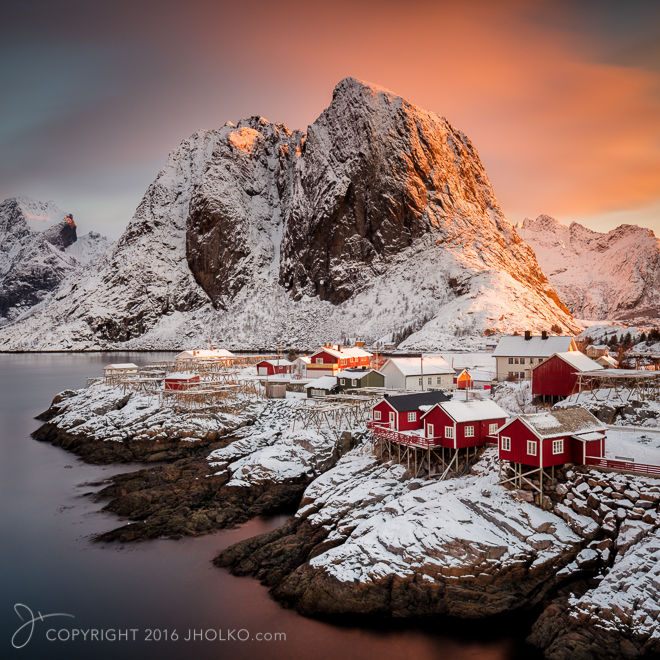
In March this year I led a new winter landscape workshop to the Lofoten Islands in Norway (Read the Trip Report) with long time good friend and fellow landscape photographer Martyn Lucas. If you are unfamiliar with Lofoten let me assure you that the landscapes of these northern islands of Norway are really quite something to behold. Precipitous and ominous peaks that rise straight out of the ocean loom over small fishing villages that comprise of small bright red houses lining the shorelines. With a dusting of fresh snow and arctic winter light the entire scene is akin to a fairy tail location and subsequently the photographic opportunities can be truly superb.

This particular photograph is in no-way unique (It has been shot countless times ) but it is for me ‘iconic’ and captures the splendid beauty of this fairy tale like location. I plan to return to Lofoten early 2018 and will have more to say about this trip at a future date.Lofoten-4779-Edit

The Wild Walk Feature Interview – Edge of the World

Media, News and Updates, Photographs

Conservation website ‘The Wild Walk‘ has just posted a short interview I did with them about Polar Photography and Polar Conservation. Click HERE to read the interview. From the Wild Walk Website:

There is an immediate need to protect our bio-diversity from the mighty Himalayas to the backdoor of our homes. Only when this is protected, we can have access to clean water, healthy food and natural surroundings. Nature as always in its supreme command defines the quality of our life. We cannot be blaming or depending on the Governments all the time and it is up to us to roll up our sleeves and do our bit to give back to nature. This pre-supposes awareness amongst people about nature and the life that it supports.

The Wild Walk, firm on the belief that wildlife literacy is the only way to get others inspired and sustain the habitat, chalk out programmes and activities to spread awareness on the subject. We educate people across the country about the forest with the aim of transforming them into wildlife conservationists. We also give lectures on wildlife science, exchange mails with aspiring conservationists and wildlife novices, share our knowledge through our website, news blog and via our wildlife documentary movies.WalkWalk

Antarctic Photography Presentation Sydney Australia FULLY BOOKED

Antarctica, Landscape Photographs, Media, News and Updates, Photographs, Travel Photography

UPDATE: The presentation I will be giving in Sydney next week on Antarctic Photography is now fully booked and oversubscribed. If you are one of those who was quick enough to secure a place I look forward to seeing you in Sydney next week.

Antarctic Photography with Joshua Holko – FULLY BOOKED

Aurora Expeditions and Joshua Holko invite you to join us for a night of Antarctic photography!

Professional polar photographer Joshua Holko will lead this special Antarctic Photography ‘Polarclass’, designed to help you understand the basic principles of photographing in the Polar Regions. Josh will discuss the key aspects of technical and artistic considerations when shooting in the poles.

Ideal for all levels of photographers, the ‘Polarclass’ is perfect for anyone interested in learning more about photographing in Antarctica.

The evening will include:

  • Technical aspects about shooting in Antarctica
  • Creative and artistic advice
  • Equipment requirements
  • What you’ll see, do and photograph!

About Joshua Holko

Joshua is an award-winning professional photographer and photography guide, who specialises in the remote polar regions of Antarctica and the Arctic. Josh was named the Global Arctic Photographer of the Year in 2015, and has won many other awards for his amazing work. Read Josh’s full profile here.

EVENT DETAILS

When: Thursday, 7 July 2016

Time: 6.30pm – 8pm

Location: Aurora Expeditions offices: Suite 12, Level 2, 35 Buckingham St, Surry Hills

View location on google maps hereAntarctica-3198-Edit


Antarctic Photography Presentation Sydney Australia

Antarctica, Landscape Photographs, Media, News and Updates, Photographs, Travel Photography

Next week, Thursday the 7th of July, I will be giving a presentation on Antarctic Photography at the Aurora Expeditions offices in Sydney.

Antarctic Photography with Joshua Holko

Aurora Expeditions and Joshua Holko invite you to join us for a night of Antarctic photography!

Professional polar photographer Joshua Holko will lead this special Antarctic Photography ‘Polarclass’, designed to help you understand the basic principles of photographing in the Polar Regions. Josh will discuss the key aspects of technical and artistic considerations when shooting in the poles.

Ideal for all levels of photographers, the ‘Polarclass’ is perfect for anyone interested in learning more about photographing in Antarctica.

The evening will include:

  • Technical aspects about shooting in Antarctica
  • Creative and artistic advice
  • Equipment requirements
  • What you’ll see, do and photograph!

About Joshua Holko

Joshua is an award-winning professional photographer and photography guide, who specialises in the remote polar regions of Antarctica and the Arctic. Josh was named the Global Arctic Photographer of the Year in 2015, and has won many other awards for his amazing work. Read Josh’s full profile here.

EVENT DETAILS

When: Thursday, 7 July 2016

Time: 6.30pm – 8pm

Location: Aurora Expeditions offices: Suite 12, Level 2, 35 Buckingham St, Surry Hills

View location on google maps here

The event is free, however places are limited. Book your place NOW.Antarctica-6927