The new 2018 year has rolled around all to quickly and very early AM tomorrow I am making my way up north to the Arctic for the winter season. It has been a hot summer here in Melbourne Australia and I am definitely looking forward to some cold weather, snow and ice. It is somewhat surreal to be sitting here in my studio at the moment surrounded by Arctic cold weather clothing whilst the mercury soars outside into the mid thirties celsius.
I am kicking off the season with my second workshop to Lofoten in Norway. I was last in Lofoten in 2016 (Read the 2016 Workshop Trip Report) and have been itching to return to this remarkable part of Norway. The landscapes of Lofoten are really quite something to behold and with a dusting of fresh snow and arctic winter light the entire area is akin to a fairy tail location and subsequently the photographic opportunities can be truly superb. After Lofoten I am travelling the remote Hornstrandir Nature reserve in the north west of Iceland for my annual winter Arctic Fox expedition. This expedition for just five photographers has long been sold out, but I recently announced dates and availability for the 2019 expedition HERE.
 Arctic Foxes are unfortunately hunted and shot across most of Iceland making them extremely shy and difficult to find (and even more difficult to photograph). In the remote north-west however the Arctic Foxes are protected inside the Hornstrandir Nature Reserve and can be more easily approached and photographed. This photography expedition will last for 7 days ( 6 nights). We will be staying in a small remote cabin that is rustic, but functional and clean.
When I finish in Iceland I will travel to Svalbard for the remainder of the winter season where I will be spending time on a personal snow mobile project before I lead my annual expedition north for fantastic snow and ice covered landscapes. I will be opening bookings for the 2019 expedition within the next week. As is traditional for me, I like to post my packing list before an expedition. I am packing for both landscape and wildlife and as such I am taking quite a bit of equipment with me (what else is new…) I am also packing a Really Right Stuff tripod with Satchler FSB-6 fluid head for both the 400mm F2.8L IS MKII and 600mm F4L IS MKII lenses in my checked luggage (yes! I am taking both lenses!). With all of that in mind I settled on the following as my selection for these two expeditions:
Lightroom F-Stop Roller (Carry on Luggage)
 The 2018 expedition to photograph Arctic Fox is long sold out, but bookings are now open for the 2019 Expedition. More information is available on the workshops page of my website at
  By way of a little background, I have been travelling to the Hornstrandir Nature Reserve (Hornstrandir is Iceland’s northernmost peninsula, covering 580 km² at the northern end of the Westfjords, to the north of the Jökulfirðir and to the northwest of Drangajökull) in Iceland during the winter months for six years now specifically to photograph Arctic Fox in winter. You can read the trip report from last years expedition here:
  The 2019 expedition is also limited to just five photographers and will run from the 22nd – 28th of February 2019.
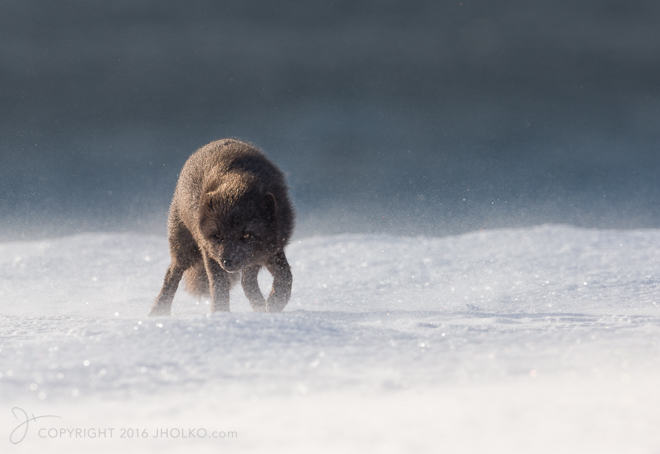 Arctic Foxes are unfortunately hunted and shot across most of Iceland making them extremely shy and difficult to find (and even more difficult to photograph). In the remote north-west however the Arctic Foxes are protected inside the Hornstrandir Nature Reserve and can be more easily approached and photographed.
 The cost for the expedition is $7,650 US Dollars. This is an all-inclusive price, but excluding your airfare to and from Isafjord in Iceland. If you have special dietary requirement you will be accommodated – please just be sure to let us know when you make your booking.
 Although no one lives here permanently, the cabin is a great getaway and the perfect place to accommodate us whilst we search for and photograph wild Arctic Foxes. Curious Arctic Foxes frequently stop past the cabin to investigate visitors and it is possible to even photograph them from right outside the cabin on occasion.


 The main focus of this expedition will be Arctic winter light, landscape and wildlife. In March and April the light conditions in Svalbard are magical. Usually winter trips to Svalbard are limited to day trips on snow mobiles quite close to the town of Longyearbyen. With our expedition ship we will explore a much bigger area including the western and northern areas of Spitzbergen. Expeditions such as this to Svalbard in winter have only really been possible for the last few years. With our ship now fully prepared for an Arctic winter it is possible for us to sail north from Longyearbyen and explore the spectacular coastline of the Svalbard archipelago.
 If you are keen to photograph the Arctic in winter you can register you interest in one of the few remaining places by
  After I finish in Greenland I am heading down to Antarctica for my White Nature expedition. Timed as the first of the season we have planned our expedition to take advantage of dramatic and variable weather as well as giant icebergs and lots of snow and ice. I have been travelling to Antarctica annually for many years now and have found early November to consistently offer the best photographic experience for all aboard. I recently published a full guide on how to choose the right photographic expedition to Antartica and it can be downloaded for free
  2018 will kick off with sold out expeditions to Lofoten for Winter landscapes and Iceland for Arctic Fox in winter. My last workshop to Lofoten was in 2016 and I am looking forward to returning to this incredible archipelago. The rising and precipitous mountains that climb directly out of the sea and the rugged coastal landscapes make for a photographers paradise. And of course, the chance of Aurora Borealis (northern lights) only sweetens the pot and adds that magic element to what is one of the most picturesque places I have ever been fortunate to visit and photograph.
 My annual expedition to photograph Arctic Fox in winter in the remote and wild Hornstrandir reserve in Iceland has also long been sold out (
 After Iceland I will travel to Svalbard to lead a winter expedition north of Longyearbyen in search of polar bears and dramatic winter landscapes. Svalbard in winter is an absolutely breathtaking location. With newly formed sea ice, snow and ice covered mountains and chance encounters with the worlds largest land predator in a stunning white environment this expedition rates as one of my absolute all time favourites (
 Earlier this year, Daniel Bergmann and I completed a brand new workshop to photograph Atlantic Puffins and other Arctic birds at several different locations in Iceland that included the remote northern Grimsey Island, inside the Arctic circle. (
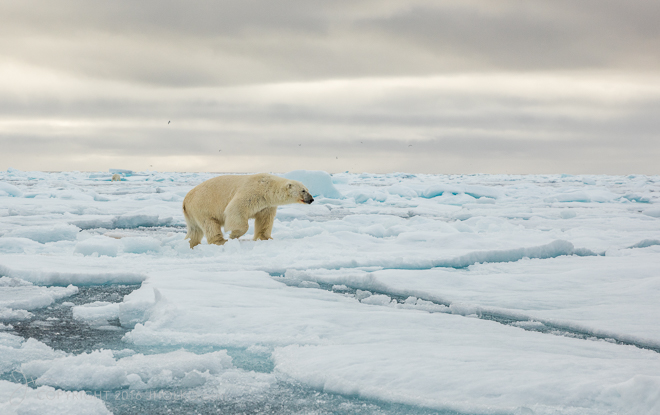
 In July I will return to Svalbard for my annual summer Polar Bear expedition. This expedition has been designed from the ground up to provide the very best possible opportunities to Photograph Polar Bears in their natural environment. With the reduction in Arctic sea ice the Polar Bears in Svalbard are dwindling in number and the number of years left to photograph them is unfortunately now extremely limited. Late July and August are the ideal times to photograph Polar Bears north of Svalbard due to the dwindling ice around the archipelago. On this expedition we will be carrying a naturalist/biologist who specialises in locating Polar Bears and an expedition leader and captain who have years of experience in placing us in the ideal position to make the best photographs. Their expertise will allow us to approach the king of the Arctic as closely and safely as possible and make incredible photographs under the spectacular midnight sun. To get an idea of what this workshop entails be sure to read the
  In October I will return to the gigantic sand dunes of Namibia for a new Desert Fire Safari. This will be my fourth visit to Namibia to photograph the ancient sand dunes of the worlds largest and oldest desert. It is the perfect juxtaposition to my usual polar landscape and wildlife photography and offers an alternate landscape of extremes. Our workshop will sea us visit the giant red sand dunes of Sossusvlei, the eerie ghost town of Kolmonskop as well as the relentless Skeleton coast and the Etosha wildlife reserve. Places are now limited.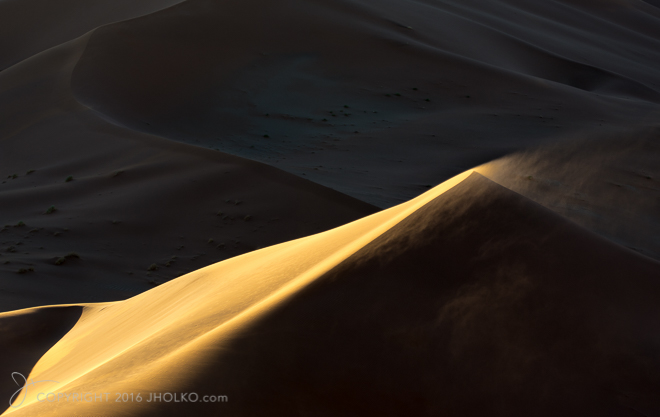
 Finally in November 2018 I will return to the sea ice of Gould Bay in Antarctica for my Emperor Penguin expedition (
 Peaking into 2019 I will be leading a brand new workshop to the north of Finland in February in search of Golden Eagles, Hawk Owls, Wolves and wolverine (full details coming very soon). The workshop is going to include a significant amount of photography from private hides and will afford opportunities to photograph rare species not often seen and even less often photographed. I am not quite ready to start taking bookings for this new workshop but you are welcome to register your interest by
 Holko's Test