Nik Radio Interview

Media, News and Updates, Uncategorized

Over the last year I have become a really big fan of several of the Nik software plug-ins for the Adobe Photoshop and Lightroom programs. In particular, Silver EFX Pro 2, Viveza 2 and Nik Sharpener Pro 3 have become indispensable tools in my image workflow. Not to mention the amazing and very popular Snapseed for the iPhone; which we had a tone of fun with on my last workshop to Iceland earlier this year. I will have more to say about Snapseed in a future blog post; suffice to say for now that this is one amazing application for photographers.

Post production work can be a major consumer of my time so I like to try and minimize my time spent in front of the computer wherever possible and these plug-ins from Nik allow me to more quickly reach the finished result I am after. The guys at Nik Software got wind that I was super keen on these time saving plug-ins and Scott Sheppard from Nik Radio and I hooked up a week or so ago to do an interview via Skype about the workshops and expeditions I lead and all manner of other photography related topics. It was a lot of fun and a great chance to chat about not only the Nik range of products and their use in my photography, but also my own thoughts on the craft of photography, workshops and expeditions and of course the inevitable gear talk that goes along with anything photography related.

If you are a subscriber to the Nik Radio Podcast you can download the interview directly in iTunes. If you are not yet a subscriber then simply open iTunes and type Nik Radio into the search bar in the iTunes store for a direct link to the Nik Radio Podcast. There are some fantastic interviews with Pro photographers in there and best of all its free. If you don’t have (or want) iTunes you can download an MP3 of the interview HERE for playback in the program of your choice. The download is around 20 megabytes. Enjoy.

Review: Canon GP-E1 GPS Receiver for the Canon 1DX Camera

Equipment, News and Updates, Photographs, Reviews, Travel Photography, Uncategorized

Geotagging photographs is becoming increasingly popular these days and there are now quite a wide range of geo-tagged guidebook resources available for photographers to aid in location scouting. If you carry a GPS and a GPS guidebook you can very easily find the location where a particular photograph was taken. If it is the first time you have ever visited an area and you are attempting to get to a well known ‘photo hot spot’ this could be a real time saver. I never put much stock in the benefit geotagging photographs could provide until my first trip to Antarctica where I quickly realised that it was just about impossible to keyword locations or record exactly where a photograph was taken without some sort of GPS tagging device. It is one thing to photograph a waterfall in a national park that is well sign posted and another to be shooting from ship, plane or zodiac where recording the position of a photograph is more difficult without some sort of GPS. Whilst it is possible to use an external GPS device to do this (or even an iPhone) I find it impractical to have to carry yet another device or to have to remember to take a photograph with my iPhone to record my position. The obvious benefit to an add on GPS to a camera (or better yet, built in GPS functionality) is the ability to record exact co-ordinates, time and direction at exact time of exposure with every press of the shutter.

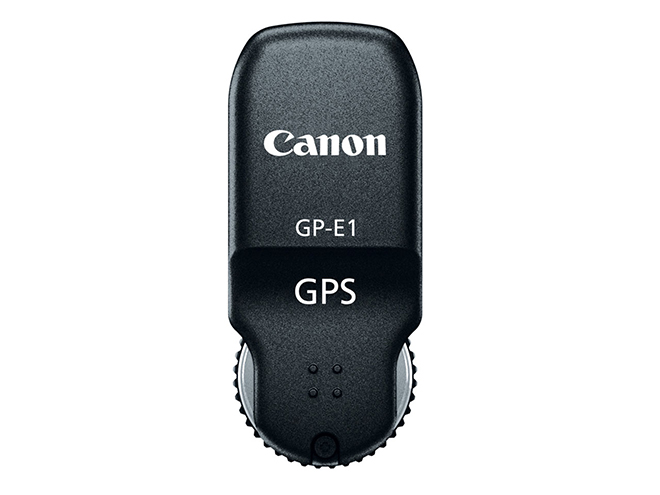
Canon GP-E1 GPS Receiver for the Canon 1DX

The Canon GP-E1 is an optional GPS accessory for the Canon EOS 1DX Camera that automatically geotags images as they are captured with latitude, longitude and directional information that is then viewable in either the provided software or 3rd party software such as Adobe Lightroom. To get my only real gripe about the GP-E1 out of the way early I find it regrettable that Canon chose not to build a GPS into the 1DX but rather offer it as an optional add on accessory. I am sure studio photographers are equally lamenting Canon for the lack of inbuilt wireless capability. Not to harp on it, but I would have definitely preferred to see GPS functionality built into the camera rather than having to purchase an optional accessory.

The GP-E1 retails for approximately $330 Australian dollars or around $270 US from B&H, but can be had online for under these prices if you are prepared to shop around and wait for a ‘grey import’. I prefer to purchase these sort of things from my local professional dealer as the cost difference is minimal these days and I like the added peace of mind of local support and warranty through Canon Professional Services (CPS).What you Get in the Box

The GP-E1 comes in a box at least six times larger than is required for the actual GPS receiver in order to accommodate the included Software CD, Instruction Manual, Warranty Cards and associated packaging. The actual GP-E1 GPS Receiver is not much larger than my thumb.

Included in the box you get:

  • Canon GP-E1 GPS Receiver
  • Instruction Manual
  • Storage Pouch for the GP-E1 when not attached to the camera
  • Warranty Cards

As a Footnote: I really wish more manufacturers would take a leaf from Apple’s marketing department and give more thought to their packaging and the copious amounts of wasted cardboard that goes into packaging their products. Apple’s packaging is really second to none and a lot of manufacturers would do very well to follow Apple’s lead in this regard. Less packaging not only means less environmental waste, but it means a lower cost of production as well.Instruction Manual

A detailed ‘pocket’ instruction manual is included in the box with the GP-E1 in nine different languages. Like most Canon manuals it is fairly well laid out and the instructions are simple and easy to follow. Although I did not check the bundled software I would guess an electronic version of the manual is probably included on disc as well since most Canon products now ship this way.

Installation

Installation of the GP-E1 is simple and straight forward. The unit simply screws into the extension system terminal after removing the terminal cover. There is an alignment pin at the top of the GPS unit which makes aligning the unit straightforward. Total time to install the GP-E1 is less than a minute and is dead simple. I would assume that anyone purchasing a GP-E1 is already familiar with the 1DX and capable of installation without the included manual.Installation with a Really Right Stuff L Bracket

The observant amongst you will have already noted that the GP-E1 screws into the 1DX in the same position that you would typically find the side plate of an L Bracket, such as those from Really Right Stuff. The GP-E1 can still be used if you have the Really Right Stuff L bracket for the Canon 1DX installed on your camera but does require that the ‘L part’ of the bracket be moved to its farthest position. This is easily accomplished even in the field as the new L bracket from Really Right Stuff now includes a place to house the required Allen Key to move the bracket. Moving the bracket to the extended position does make an already large camera that much larger again and it would have been preferable if space could have been allowed for the GP-E1 during the design of the Really Right Stuff L Bracket. I am told that Canon could not supply a GP-E1 to Really Right Stuff during the design of the bracket and as such the decision was made to simply provide the ability to extend the bracket to accommodate the receiver.  Although it might look a bit awkward to handle with the L bracket in the extended position it actually provides a solid place to grip the camera when transporting it and is quite practical to use in this configuration. The only downside being the extra space that is taken up in the camera bag if you leave the GP-E1 attached to the camera and the L bracket in the extended position. I have not yet decided wether to leave the GP-E1 permanently attached to my camera and the L bracket in the extended position but I suspect I will be removing them at least for international and domestic airline travel just to save space in my camera bag. Once on location I will likely leave them permanently attached to the camera for the duration of my photography.Initialising

In order to begin geo-tagging your photographs after installation of the GP-E1 you need to enter the cameras menu system and tell it you have attached the GPS Receiver. To do this you select GPS in the GPS device settings menu and simply set it to ‘Enable’. According to the manual signal acquisition takes anywhere from thirty to sixty seconds after you turn on the camera. In my own experience it was much faster than this taking around fifteen seconds. Although I was able to obtain a satellite signal inside my house I recommend you do this step outside initially to more easily acquire a satellite signal. A flashing GPS annotation is displayed on the small lower LCD screen on the 1DX prior to a ‘satellite lock’. Once ‘Lock’ is achieved the GPS text stops flashing and the camera is now ready to geotag images. At this point all you have to do is press the shutter and the GP-E1 will write its GPS data to your file automatically. Regardless of wether you are shooting RAW or Jpeg this information is written directly into the file and is not attached as a side-car file.Features

The GP-E1 records the latitude and longtitude of its location as well as the elevation and direction each time the shutter is pressed and adds this information to the camera generated image file (RAW or jpeg) The GP-E1 also records the UTC or Co-ordinated Universal Time which is essentially the same as Greenwich Mean Time. The direction recorded simply indicates the direction the camera was facing when the shutter was pressed and an exposure recorded. This information is displayed as Direction: NE 45 indicating that the camera was facing 45 degrees North East. This information could be useful if you were trying to replicate a particular photograph or wanted to know your angle in relation to the setting sun as an example.

The GPS information display also indicates either ‘2D’ or ‘3D’. A ‘3D’ display means the GP-E1 is able to record the cameras elevation at the time of exposure. ‘2D’ indicates the GP-E1 cannot record the elevation at time of exposure and thus will not record this information to the file. A more detailed explanation of why the GP-E1 might not be able to include elevation information is not included in the manual but I would surmise it is related to either signal strength or number of available satellites.

Positioning Interval

There are multiple options to set the Positioning Interval of the GP-E1. The positioning interval determines how often the GP-E1 queries nearby satellites for location information. Shorter positioning intervals yield more accurate location information but require more battery power and thus fewer exposures can be made on a single charge. The options are every: 1 second, 5 seconds, 10 seconds, 15 seconds, 30 seconds, 1 minute, 2 minutes or 5 minutes. I have not as yet had a chance to experiment how much of difference this makes in real world shooting; however, the manual indicates a difference of 200 frames between 1 second and 5 minute intervals. Until such time as I can test this in the field I will leave it set to every 30 seconds which would seem sufficient for most applications. Perhaps if shooting from a fast moving car, plane or helicopter it would be worth changing to every second. For most land based applications I would imagine  a setting of 1 or 2 minutes would be sufficient.

Digital Compass

The GP-E1 includes a Digital Compass which provides you with the direction the camera was facing when the exposure was made. The compass can also be used when shooting by pressing the ‘info’ button on the 1DX which will display the cameras inbuilt level and the direction the camera is facing. The compass is also displayed in Live View mode or movie shooting, but can be turned off my pressing the ‘info’ button. In order to take advantage of the Digital Compass feature the compass has to be calibrated and this is achieved by rotating and waving the camera laterally and vertically in at least a 180 degree arc. This process is well described and documented in the manual and only takes a few seconds. This process only needs to be performed once and not every time the camera is turned on.

GPS Time

The GP-E1 can be used to record the time of exposure with an error margin of +/- 2 seconds. For anyone who travels a lot like I do this is a real benefit as I am constantly forgetting to update my cameras time from my point of origin to the time at my current location. The GP-E1 can be set to automatically update which removes the requirement to manually update the cameras time or it can be manually updated by a force option in the menu. Comparing this time to the official local time as displayed on my computer the GP-E1 is extremely accurate and within the +/-2 seconds quoted in the manual (although it does not take into account Local Daylight Savings Times).

Power

Unlike the Canon GP-E2 the Canon GP-E1 is powered from the Camera’s main battery and does not require an additional battery to make it work. This is a real positive as I do not want to have to carry yet another battery type on a photographic shoot. The only down side to utilising the Camera’s main power source is that it does reduce the number frames that can be captured on a single charge. The number of reduced frames will depend on how often you have set the GP-E1 to update its location information and the external temperature in which you are shooting. Colder temperatures will result in fewer exposures before a battery charge or replacement is required.

Bundled Software

The GP-E1 is supplied with a Canon Software solutions disc which includes a Map Utility and ImageBrowser EX software. The map utility uses local information recorded by the receiver to show shooting locations and the shooting direction on a virtual map. Imagebrowser EX is used to update the Map utility. Since Adobe Lightroom is capable of reading the geotagged RAW files directly from the camera I did not bother to install and test this software as I have no need for it. If you use Canon’s own Digital Photo Professional Software (DPP) or other RAW image processing software that does not natively read geotagged files this bundled software may be more useful to you. I suspect anyone who is using a GP-E1 will most likely also be using Adobe Lightroom and therefore not require this bundled software.

Weather Sealing

The supplied manual does not state wether the GP-E1 is weather sealed. However, the unit is for all intent and purpose fully sealed and highly unlikely to fail due to exposure to the elements. Installation of the GP-E1 does require removal of the Extension System Terminal Cover; however, the GP-E1 is a very snug fit once screwed into position and I feel quite confident that there is likely to be no effect on the cameras weather sealing with the GP-E1 in position. I would happily shoot with the GP-E1 attached to the 1DX under any normal conditions I might subject the camera to and this includes heavy rain, snow, sleet, salt spray, dust, heat and cold.

Who is it for?

The simple answer is the GP-E1 is for anyone who has a 1DX and wants to record the exact location where their photographs were taken. Personally, I purchased one for the Arctic and Antarctic Expeditions that I lead as I find it difficult to otherwise record exactly where my photographs were taken when shooting from ship and zodiac.

Testing

Initial testing of the GP-E1 at parklands nearby to my house shows that it is highly accurate in recording the exact position a photograph was taken. Comparing its location information to that captured by the iPhone shows negligible difference.  Looking at the location information from my testing I can see that the GP-E1 was able to record accurate data about where each image was captured and thus it could easily be used to help add place names to images after a shoot.

Lightroom Map Module with GP-E1 Tagged Files

On import into Lightroom Raw files that have been geotagged by the GP-E1 automatically show up in the Map Module without any input from the user. I personally find the Map Module in Lightroom a bit of a gimmick but I suspect it may yet prove useful for working out place names where photographs were taken.

Although I have already conducted some testing of the GP-E1 I see the first real field test as the Jewels of the Arctic trip I am leading in August next year when I will be travelling on the Polar Pioneer from Longyearbyen in Svalbard to Greenland and Iceland. At sea there are no signs to otherwise record the position a photograph was taken so I will be totally reliant on the GP-E1 to record exactly where my photographs were taken. Based on my experience so far I feel very confident that the GP-E1 will work just fine.

In the meantime I will take the GP-E1 to Iceland for the two Winter Workshops I am leading there in March next year and again in July for my Summer workshop before I head North for eight weeks photography in the Arctic.

Conclusion

The GP-E1 is an easy to install, easy to use device for effectively geotagging your images with Canon’s 1DX camera. Whilst the addition of the GP-E1 makes an already big and heavy camera bigger and heavier yet again it does provide a rich feature set and geotagged files that can be natively read in programs such as Adobe Lightroom. I would have liked Canon to build the GP-E1 into the 1DX (since even my iPhone includes built in geotagging) but I guess I will have to wait for the 1DX Mark 2 for this feature. In the meantime I can see the GP-E1 becoming a permanent addition to my camera equipment. Particularly for the trips I lead to the Arctic and Antarctic.

Pros

  • Does not require specialised software to take advantage of the GPS co-ordinates (files can be imported directly into Adobe Lightroom where they are automatically tagged in the maps module)
  • Is powered off the cameras main battery and does not require a seperate dedicated battery like hot shoe GPS units
  • Small, lightweight and relatively inexpensive

Cons

  • Not built in to the Camera like an iPhone or many other current digital cameras
  • Makes an already big and heavy camera even bigger

You can order the Canon GP-E1 GPS Receiver for the 1DX camera directly from B&H

Capture Australia the Annual 2012 Features Antarctic Images

Antarctica, Landscape Photographs, Media, News and Updates, Photographs, Travel Photography, Uncategorized

Hot on the heals of finding one of my favourite Antarctica images was photograph of the day at National Geographic’s website I discovered that Capture Magazine (Australia’s top selling Pro Photography magazine) also picked up two photographs from the same trip and featured them in their Annual which was released last week. This is the second year in a row Capture has featured my photography in the landscape section as part of their Special Annual edition. This time it was ‘Fortress’; which won a Silver with Distinction at the Australian Professional Photography Awards (APPA) earlier this year and HMAS Penguin Pool. Following on the theme from my last blog post both these images were shot from the deck of the Ocean Nova as we cruised slowly past these most unusual icebergs.

ICELAND IN WINTER UPDATE

The 2nd Iceland Winter Workshop from March 22nd – March 31st next year that I am co-leading with my good friends Andy Bigs and Daniel Bergmann is now sold out. We are looking forward to frozen waterfalls, icebergs, glaciers, geothermal features and with a little luck the spectacular northern lights (Aurora). It is going to be an amazing trip and I am very much looking forward to it. If you were interested in attending, but missed out on this trip you can still drop me an email to be put on the waiting list or to pre-register your interest for 2014.

Mountain of Fury – Ushuaia South America

Landscape Photographs, News and Updates, Photographs, South America, Uncategorized

One of the real joys of ship based photography is to stand on the ship’s deck with a camera and watch (and photograph) the scene slowly roll past as you cruise along. Many of my best photographs from Antarctica were made this way – including ‘Penguins Adrift in Snow Storm‘ which was recently featured as photograph of the day on National Geographic’s website. Unlike land based photography, shooting from ship requires absolutely no strenuous walking or hiking (and obviously no tripod) – except perhaps to the bar for the odd drink or the occasional shore excursion via zodiac. All that is really required is a little patience and perhaps a decent pair of sea legs if the swell is up to help keep your balance. Even then, it is amazing how easy it is to brace yourself against the ship to create a stable shooting platform. In point of fact, shooting from ship is actually far easier than helicopter.

During my last Antarctica expedition my good friend Martyn and I spent a lot of time shooting side-by-side as we cruised slowly up the Beagle Channel toward the Drake Passage and Antarctica. Flanked by the Andes mountain range the scenery was truly spectacular with jagged mountain peaks, swirling clouds and dramatic light. Conveniently our trip departed late afternoon from Ushuaia (as most trips do) and we were fortunate to be treated to some lovely dramatic and moody light. As a photographer who searches for the dramatic and portentous this was truly food for the soul and I can vividly recall dashing from one side of the ship to the other with a huge grin on my face in an effort to drink it all in.

Although I had chartered a helicopter with one of the other people on the trip to fly over the Andes mountains the day before; ironically I actually ended up prefering those images I shot from the deck of the ship. One of my favourites being this photograph which is highly evocative of the jagged and precipitous peaks that comprise the Andes Mountains and the dramatic clouds that are constantly swirling around the peaks and summits.A higher resolution version of this photograph can be seen on my website in the South America Portfolio. I am looking forward to cruising up the Beagle Channel again next year on my next Antarctica Expedition with my co-leader Daniel Bergmann and I will most definitely be out on deck armed with cameras as we sail slowly past the spectacular Andes Mountains on our way to the last great frontier – Antarctica.

National Geographic Photo of the Day

Antarctica, Landscape Photographs, Media, News and Updates, Photographs, Travel Photography, Uncategorized, Wildlife Photographs

It is always a pleasant surprise when a photograph is picked up and featured by National Geographic magazine so I was very pleased this morning to find that one of my favourite images from my last Antarctica Expedition was featured as the photo of the day on the 6th of November over at National Geographic’s website. This photograph was also amongst the editors favourite picks in September this year and was the photograph I chose to use to feature the Antarctica Expedition I am co-leading with my good friend  Daniel Bergmann in November next year. This is the 3rd time I have had my photography featured over at National Geographic’s website. The previous two photographs Blue Berg and Highway to Hell were both taken during my 2010 Iceland trip. A high resolution version of this newly featured image can be downloaded as a desktop wallpaper HERE. This photograph is also available as a 20 x 30″ Fine Art Print on Moab Somerset Museum Rag paper in a limited edition of ten (there are only three remaining in the edition).

If you would like to take photographs like this there are still a few spaces remaining on my Antarctica expedition next year for anyone who would like to join me. Just pop over to my website at www.jholko.com where you can register online for a booking form.

The Jewels of the Arctic Expedition – Availability Update

Arctic, Landscape Photographs, News and Updates, Photographs, Travel Photography, Uncategorized, Wildlife Photographs, Workshops and Expeditions

Just a quick update on the availability of remaining places for the Jewels of the Arctic expedition I am co-leading with Daniel Bergmann in August next year. If you are interested in grabbing one of the remaining places and would like more information you can download a detailed itinerary and information PDF HERE.

AVAILABILITY

  • Triple Share Male (SOLD OUT)
  • Triple Share Female – 2 Places Available
  • Twin Share Male (SOLD OUT)
  • Twin Share Female (SOLD OUT)
  • Twin Private Male – 3 Cabins Available
  • Twin Private Female – 3 Cabins Available
  • Mini-Suite – Only 1 Suite  Available
  • Captains Cabin – 1 Cabin Available

This dedicated photographic expedition departs on the 5th of August 2013 and docks on the 18th of August. The trip will set sail from Longyearbyen in Svalbard and will be taking in the very best of Spitsbergen and Greenland before docking in Isafjordur in Iceland. A connecting flight will then take you to Keflavik International airport for connecting flights home.

This expedition will combine the very best of Spitsbergen and Greenland with a taste of Iceland and has been structured to provide the best possible photographic opportunities. Spitsbergen’s rugged northwest coast comprises mountains, tundra and fjords. Greenland’s remote east coast shows off the immensity of the icecap, fantastic icebergs and massive granite spires rising over 1000 metres above the fjords.

This expedition offers a complete Arctic experience for photography: tundra walks amidst reindeer and exquisite dwarf vegetation, zodiac cruises  near calving glacier fronts, hikes to breathtaking mountain vistas and warm welcomes into indigenous communities. We will likely see and photograph Polar Bears, Reindeer, Arctic Foxes, Walrus, Glaciers, icebergs and more. It is going to be a truly spectacular photographic trip for a very limited number of photographers aboard an ice hardened expedition class ship.

The expedition is for a strictly limited number of 50 participants plus leaders and expedition guide. Whilst many trips to the Arctic take 100+ tourists this expedition is capped at a maximum of 50 dedicated photographers in order to ensure the best possible experience and photographic opportunities. We will be using an ice hardened expedition ship with a highly experienced crew in order to ensure we can get as close as possible to big ice and place you in the best locations for making photographs. Our expedition ship the ‘Polar Pioneer’ is equipped with sufficient zodiacs and crew for all photographers to be shooting simultaneously with plenty of room to spare for camera equipment.

Travel Photographer of the Year Finalists 2012

Landscape Photographs, Media, News and Updates, Photographs, Travel Photography, Uncategorized

Finalists for Travel Photographer of the Year (TPOTY) have been announced and I am very honoured to be included amongst the list of finalists names. It is particularly pleasing to see a few other Australian photographers also amongst the finalists – some familiar names and also some new ones. This is the first time I have entered Travel Photographer of the Year and I did so after reading that the finals are judged on actual prints rather than digital images online. I am a big proponent for judging prints over digital images. There is something magical about a truly beautifully crafted fine art print that no digital jpeg can ever match. I know many photgraphers that dont print their own work or even have it printed at a lab for that matter. Personally however, I really don’t feel like I have produced anything until such time as I actually make a print. I come from a film background and photography has always been about the printed image for me. Competitions that judge prints are becoming a rare commodity these days so I was keen to support TPOTY if for no other reason than they are helping keep the craft of print making alive. I am looking forward to making the print I need to submit by the end of this month on my favourite paper Moab Somerset Museum Rag and to seeing the photographs from the other finalists when the winners are announced later this year.

The finalist images will be exhibited at the Royal Geographical Society (with IBG) in Kensington, London, England in summer 2013. The exhibition will open with a private view in June 2013. Doors will open to the public two days later, closing in mid-August 2013. The exhibition will be free to enter and I am hoping to stop past on my way through London before my Summer Iceland and Arctic Workshops.

This image from Antarctica ‘Ice Sanctuary’ was not my entry – but I wanted to share a similar image from my last Antarctica expedition in 2011. A high resolution version of this photograph can be seen on my website at www.jholko.com in the Antarctica portfolio. What was my finalist image? You will have to wait and see…..Footnote: I have become very selective about which photographic competitions I choose to enter these days. Competitions are springing up all over the web on a daily basis and many of them have horrendous terms and conditions that see the photographer signing away all their rights to their images. If you are entering competitions do yourself a big favour and read the fine print. Even competitions that are sponsored by major corporate giants are being found guilty of creating ‘rights-grab’ competitions that see the photographer ending up with no rights to their own images. Make sure the competition you enter protects your rights as a photographer.

Only 600 Miles to the North Pole!

Arctic, Landscape Photographs, News and Updates, Travel Photography, Uncategorized, Wildlife Photographs, Workshops and Expeditions

A couple of days ago I received an email from someone interested in joining my new expedition to the Arctic in August next year – The Jewels of the Arctic. As a parent of young kids one of the questions about the trip really made me smile and after some back and forth email I just had to ask if it was ok to share it on my blog. The question at its heart is actually a very good one – ‘How far will we be from the North Pole?‘. The interested party clearly also saw the humour in the circumstance of the question and kindly agreed to let me share the relevant correspondence here on my blog. Enjoy.

Dear Josh,

I would very much like to join you on the Jewels of the Arctic trip next August but I just have a few questions if thats ok. I see that the trip finishes in Iceland which is fantastic as I have not been there before either. How long would you recommend I stay? And can you please give me some ideas of things I should see?

Will you be giving advice on what equipment to bring? I only have a Rebel and two zoom lenses for it but plan on getting a longer lens before we leave.

And I feel silly for asking this, but my kids want to know how far we will be from the North Pole as they would like me to personally deliver their Christmas wish lists to Santa Clause. Last year they did not get the new bikes they asked for and they think the mail man might never have made it to his house.

Thanks Josh.

I couldn’t let an opportunity to add to the humour slide by…

Dear XXXXX,

Thank you for your email and interest in the Jewels of the Arctic trip next August. I have attached some additional information on the expedition for your reading and made some comments below about Iceland and equipment

<Snipped out the extensive Iceland and equipment text>

In terms of view of how close we will be to the the North Pole: At our most northerly position we will be only 600 miles from the Pole; although much is dependant upon the prevailing ice. We will see and photograph grazing Reindeer on this expedition as well as Polar Bears and other wildlife. Whilst I cannot guarantee Rudolph or his helpers will be amongst the Reindeer I feel quite sure that at least one of the available Reindeer will be able to deliver your children’s letters to Santa in time for Christmas (I am under similar instructions from my own kids). I believe the standard Reindeer courier cost is a small bag of carrots. Please let me know if you’re children would be happy to have their letters delivered by Reindeer and I will endeavour to make the necessary arrangements.

Kind Regards,

I was certainly wondering at this point if I was going to hear back – but I did. And after a few more swapped emails the interested party has joined the expedition and we have agreed to package up our Christmas letters and send together. If anyone else would like their Christmas letters delivered by Reindeer please let me know.

Royal Canadian Geographic Society 2013 Calendar

Antarctica, Media, News and Updates, Photographs, Travel Photography, Uncategorized, Wildlife Photographs

One of the real joys of Polar photography (both North and South) is the abundance of wildlife and the myriad of photographic opportunities available for not only landscape, but also wildlife photography. I am still sorting through the thousands of frames I shot of penguins and seals on my last Antarctic trip even as next years new and exciting Jewels of the Arctic expedition and Antarctic Expeditions are rapidly approaching.

One of my favourite wildlife photographs from Antarctica last year is of an Antarctic fur seal wallowing in the snow not far from the waters edge. This was a fun photograph to take as I was lying in the snow during a shore landing only a few metres from the seal; which seemed totally oblivious to my presence. I shot this with a 300mm lens to get nice and tight and simply waited for the seal to raise its head and yawn (as they are prone to do – seals seem to get bored very easily 🙂 ). This photograph was recently picked up by the Royal Canadian Geographical Society and I am pleased to say is featured in their 2013 Calendar as the image for September. Copies of the calendar are available from the Royal Canadian Geographic Society.A larger version of this photograph can also be seen on my portfolio website at jholko.com under Antarctica.

Chamonix France – A Glass of Wine, Cable Release and Deck Chair

France, Landscape Photographs, News and Updates, Photographs, Travel Photography, Uncategorized

Very occasionally a situation presents itself where I can make a photograph I am really pleased with from the side of the road, or some other easily accessible location. More often than that not however I have to travel, walk and hike to get the image I am after – Nature rarely serves up the scene on a platter; you have to get out there and hunt for it.

Whilst in France a couple of months ago I was able to make a photograph that was under the most civilised of circumstances. I was fortunate to get a room with a rear balcony at my hotel in Chamonix and immediately noted the wonderful view across the mountain range and the angle of the setting sun. Tired from driving all day my wife and I unpacked, opened a bottle of Burgundy, tore a piece off a fresh baguette with some cheese and pulled up a couple of deck chairs to watch the sunset over the alps. As we sipped our wine the light continued to get better and better so I scurried inside, grabbed my camera, tripod  and cable release and set it up next to my deck chair. With the sun setting and cable release in hand I clicked the shutter between drinks and nibbles. Looking back on it I cant recall a more civilised photography session and as such this photograph of the Alps from Chamonix is my photograph of the month for November.